
There’s always a reason to wait on upgrades.
Next year might be better. Prices might come down. The current setup still works, more or less. Tenants haven’t complained. Nothing is broken.
And yet, 2026 feels like one of those points where “good enough” starts slipping into “quietly falling behind.”
Not dramatically. Not overnight. But enough to notice.
Because rental property technology isn’t just improving. It’s becoming expected. And the gap between properties that use it well and those that don’t is starting to show up in places landlords actually care about. Vacancy. Tenant quality. Retention. Time.
This isn’t about turning your property into a tech showcase. It’s about removing friction. For tenants, and honestly, for yourself.
The shift is about expectation
A few years ago, features like online rent payments or digital applications felt like upgrades.
Now they feel… standard.
Tenants, especially in markets like Los Angeles, expect:
- Online applications that don’t require printing anything
- Digital lease signing
- Easy, trackable maintenance requests
- Quick, clear communication
When those things aren’t available, it doesn’t always lead to complaints. It just leads to hesitation.
And hesitation, in a competitive market, often means they move on.
If you’ve seen how what renters expect from LA apartments is evolving, the pattern is pretty consistent. Convenience is no longer a bonus. It’s part of the baseline.
Vacancy is where outdated systems become visible
Most landlords don’t think about tech during stable periods. They think about it when something slows down.
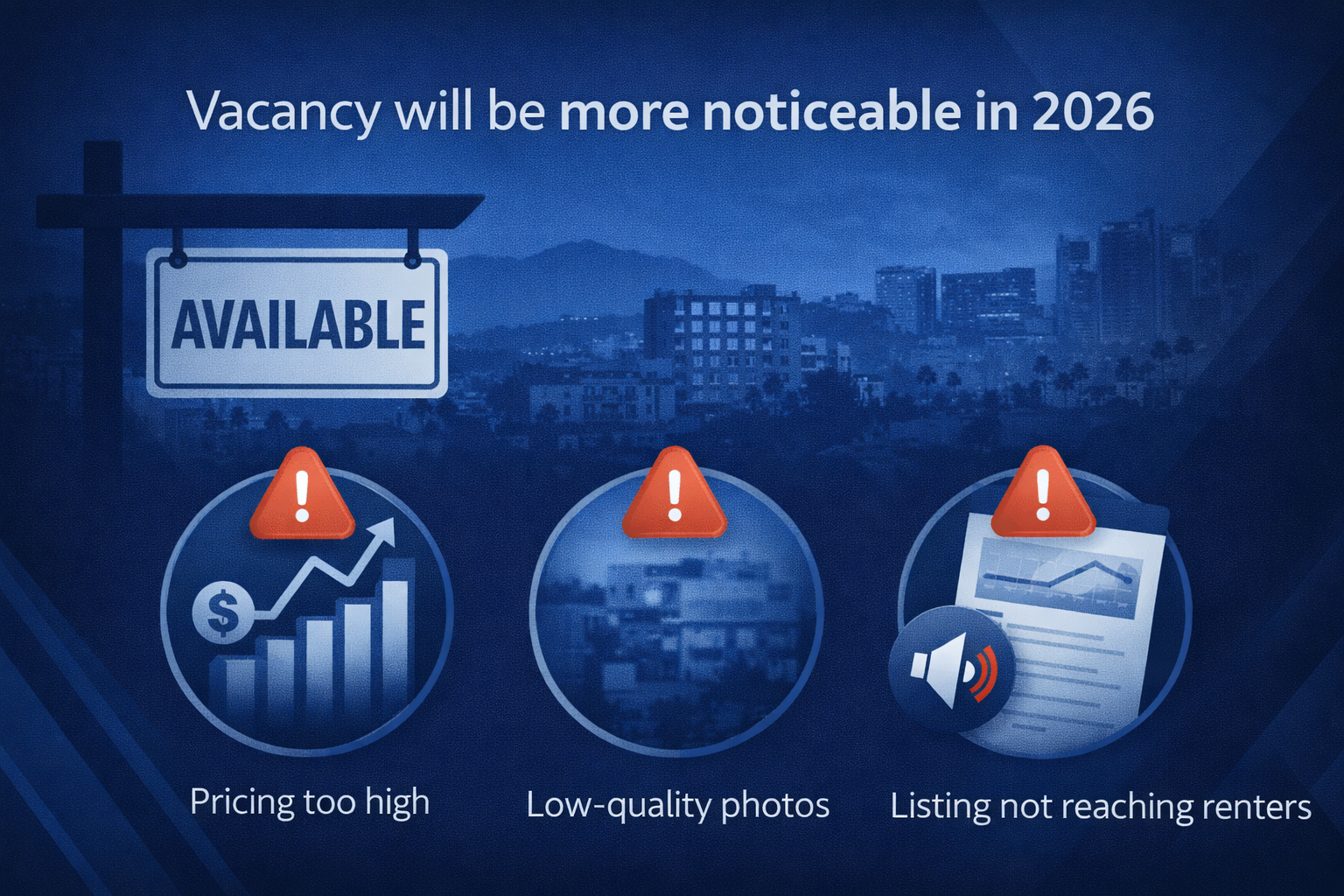
A unit sits longer than expected. Inquiries feel inconsistent. Applications drop off halfway through.
That’s when the cracks show.
Outdated processes create friction:
- Prospective tenants delay applying because it feels complicated
- Communication gaps slow down decision-making
- Manual scheduling leads to missed opportunities
None of these feel like major problems individually. Together, they extend vacancy.
And as we’ve already seen when looking at how vacancy impacts rental income in Los Angeles, even small delays start to compound.
Technology doesn’t eliminate vacancy. But it removes the small inefficiencies that quietly stretch it out.
Smart tech improves tenant quality, not just speed
There’s a common assumption that faster systems just mean faster leasing.
That’s only part of it.
Better systems also mean better filtering.
Online applications that are structured properly tend to:
- Reduce incomplete or low-quality applications
- Make it easier to compare applicants objectively
- Surface red flags earlier in the process
This matters more in a market where renters are more selective and landlords feel pressure to fill units quickly.
Rushed decisions tend to cost more long-term than slow ones. Technology helps keep the process moving without lowering standards.
Maintenance tech changes more than response time
Maintenance is one of those areas where landlords often rely on habit.
Text messages. Phone calls. Informal tracking. It works, until it doesn’t.
In 2026, tenants increasingly expect:
- A clear way to submit requests
- Updates on progress
- Faster coordination
And more importantly, they remember when those expectations aren’t met.
Maintenance platforms don’t just speed things up. They create visibility. For both sides.
Tenants feel heard. Landlords stay organized. Issues get documented properly.
It sounds simple. It also prevents small issues from becoming bigger, more expensive ones.
Pricing and market awareness are becoming more data-driven
Setting rent used to rely heavily on experience and intuition.
That still matters. But in 2026, it’s not enough on its own.
Market data tools now provide:
- Real-time rental comps
- Demand indicators
- Pricing trends at the neighborhood level
This is especially important in submarkets like Glendale, where small pricing misalignments can extend vacancy without obvious warning signs.
If you’ve explored Glendale rental market trends and forecasts, you’ve probably noticed how sensitive pricing has become. Not dramatically, but enough that guesswork starts to cost money.
Tech doesn’t replace judgment. It sharpens it.
Communication is where many landlords quietly fall behind
Tenants don’t expect instant responses to everything. But they do expect clarity.
Delayed replies. Missed messages. Unclear next steps. These don’t always lead to conflict, but they do shape perception.
And perception influences:
- Whether tenants apply
- Whether they renew
- Whether they recommend the property
Simple tools like centralized messaging systems or automated updates make a difference here. Not because they’re advanced, but because they’re consistent.
Consistency is what tenants notice.
Not all upgrades need to be big to matter
There’s a tendency to think of “upgrading tech” as a major overhaul.
In reality, the most effective changes are often small:
- Switching to online rent collection
- Adding digital applications
- Improving listing quality with better photos and descriptions
- Using scheduling tools for showings
Each of these removes friction at a different stage of the leasing process.
And collectively, they create a smoother experience that tenants respond to, even if they don’t explicitly call it out.
Where property managers make this easier
For many landlords, the hesitation around tech isn’t about cost. It’s about implementation.
What to use. How to set it up. Whether it actually makes a difference.
This is where property managers tend to simplify things.
Instead of piecing together tools, they bring structured systems that are already tested:
- Integrated leasing workflows
- Standardized communication processes
- Data-informed pricing strategies
- Maintenance tracking systems
We’ve seen how this reduces not just workload, but uncertainty.
Technology works best when it’s part of a system, not a collection of tools.
Waiting has a cost, even if it’s not obvious
The tricky part about delaying tech upgrades is that the cost isn’t always immediate.
It shows up gradually:
- Slightly longer vacancies
- Slightly lower-quality applications
- Slightly more time spent managing tasks manually
Each one feels manageable. But over time, they add up.
And by the time it becomes noticeable, you’re not just catching up. You’re trying to close a gap that’s already formed.
2026 is less about upgrading, more about keeping up
Rental property technology isn’t a trend anymore. It’s infrastructure.
Tenants expect it. Markets reward it. Processes depend on it.
The landlords who benefit most aren’t necessarily the ones using the most advanced tools. They’re the ones using the right ones consistently.
If you’re looking at 2026 and wondering whether now is the right time to modernize your rental operations, it probably is.
And if the process feels unclear or time-consuming, working with a team like Posh Property Management can help bring those systems into place without turning it into another project to manage.
Because at this point, the question isn’t whether tech helps.
It’s how much longer you can afford to operate without it.
FAQs
What technology should landlords prioritize in 2026?
A: Online rent collection, digital applications, maintenance tracking systems, and pricing tools are among the most impactful upgrades.
Does rental property technology really reduce vacancy?
A: Yes. It removes friction in the leasing process, making it easier for tenants to apply and faster for landlords to respond.
Is upgrading rental tech expensive?
A: Not necessarily. Many improvements are low-cost and focus on efficiency rather than large investments.
Can technology improve tenant quality?
A: Yes. Structured applications and better screening tools help identify stronger applicants more consistently.
Do property managers use advanced technology systems?
A: Most professional property managers use integrated platforms that streamline leasing, communication, maintenance, and pricing.