
There’s a version of rental pricing that looks clean on paper.
Square footage. Bedrooms. Bathrooms. Location. Done.
And then there’s the version that actually plays out in Los Angeles.
Because in LA, two nearly identical units can lease at noticeably different prices, and the difference isn’t always obvious at first glance. It’s usually tied to small details. The kind renters don’t always list as “must-haves,” but quietly factor into their decision.
Amenities have shifted into that category.
Not all of them. Not equally. And not always in predictable ways.
So if you’re trying to understand what actually drives higher rent in this market, it helps to look beyond the usual checklist and pay attention to what renters consistently respond to.
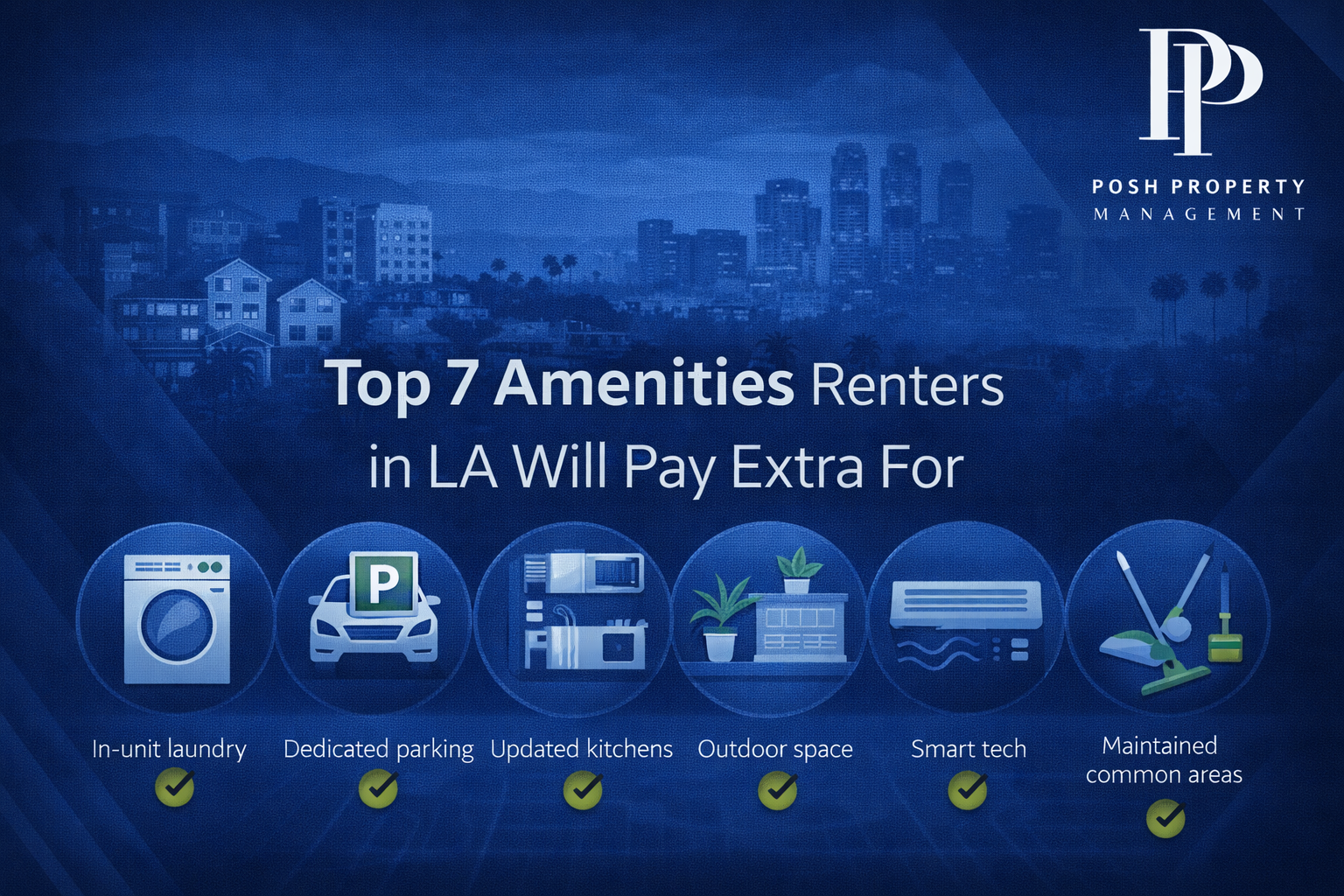
1. In-unit laundry (still doing most of the heavy lifting)
This one isn’t new. It’s just not negotiable anymore.
In-unit laundry used to be a premium. Now it’s closer to a baseline expectation in many LA submarkets. Especially for one-bedroom units and up.
Properties without it aren’t automatically discounted. But they are compared differently.
Renters will often:
- Accept a slightly higher price for the convenience
- Stay longer once they have it
- Prioritize it over other upgrades
It’s not flashy. It’s just consistently valuable.
And in a market where tenant expectations are evolving, this is one of the few amenities that reliably justifies higher rent without much explanation.
2. Dedicated parking in the right context
Parking in Los Angeles is complicated.
In some neighborhoods, it’s expected. In others, it’s a competitive advantage. And in a few, it’s the deciding factor.
The key isn’t just having parking. It’s having the right type:
- Assigned spaces over first-come setups
- Covered or garage parking over open spots
- Secure access where possible
Renters don’t always say, “We’ll pay more for parking.” They say, “We won’t take a place without it.”
Which ends up being the same thing.
3. Updated kitchens that feel usable, not just modern
There’s a difference between a renovated kitchen and a functional one.
LA renters tend to notice both.
Quartz countertops and new cabinets help, but layout, storage, and appliance quality often matter more. A kitchen that feels intuitive gets more attention than one that simply looks new.
This is especially true for tenants planning to stay longer.
If you’ve looked at what LA renters actually prioritize in apartments, usability shows up again and again. Not in bold, obvious ways. More in how the space feels day to day.
And that’s what people end up paying for.
4. Outdoor space, even if it’s small
Balconies. Patios. Shared courtyards. Rooftop access.
Outdoor space has shifted from “nice to have” to something closer to emotional value.
In a city where space is limited and density varies block by block, even a small private outdoor area can:
- Increase perceived value
- Shorten decision time
- Support higher rent pricing
It doesn’t have to be large. It just has to exist and feel usable.
This became more obvious in recent years, and it hasn’t really reversed.
5. Smart tech that actually simplifies things
Not all tech upgrades matter.
Smart thermostats, keyless entry, video intercoms, and secure package systems tend to stand out. Mostly because they remove friction.
Tenants don’t always choose a property because of these features. But they notice when they’re missing.
And in a market where leasing decisions happen quickly, small conveniences often tip the balance.
This connects closely with broader rental property technology trends for 2026, where the focus isn’t on flashy upgrades, but on systems that make everyday interactions easier.
The value isn’t in the tech itself. It’s in how invisible it feels when it works well.
6. Air conditioning that actually works (and is expected)
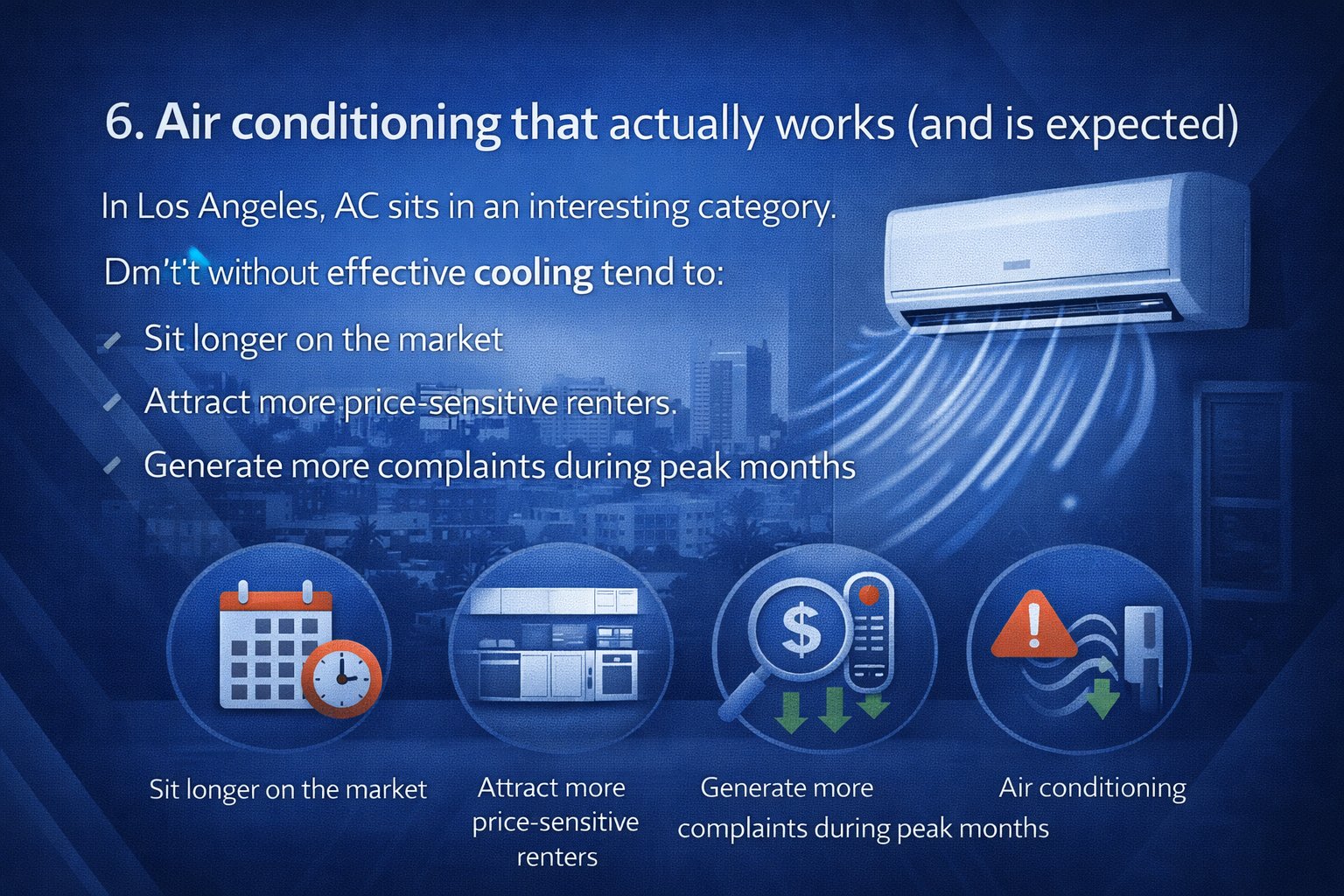
In Los Angeles, AC sits in an interesting category.
It’s not universally required. But in many neighborhoods, especially inland areas like Glendale or the Valley, it’s quickly becoming expected.
Units without effective cooling tend to:
- Sit longer on the market
- Attract more price-sensitive renters
- Generate more complaints during peak months
This is one of those amenities that doesn’t always increase rent dramatically, but its absence can reduce it.
Which, from a pricing perspective, matters just as much.
7. Clean, well-maintained common areas
This one is easy to overlook.
Hallways. Entryways. Landscaping. Shared spaces.
These aren’t usually listed as “amenities,” but they shape first impressions. And first impressions influence whether a renter is willing to stretch on price.
In buildings where common areas feel:
- Clean
- Maintained
- Intentional
Renters tend to assume the same about management and responsiveness.
And that perception carries into how much they’re willing to pay.
Amenities don’t work in isolation
One upgraded feature won’t carry a unit.
What matters is how amenities come together to create a clear offering.
A unit with:
- In-unit laundry
- Good parking
- A functional kitchen
- Clean presentation
Will outperform one with a single standout feature and several gaps.
This is where many landlords miscalculate. They invest in one visible upgrade and expect it to shift pricing significantly.
But renters evaluate holistically.
Pricing still needs to match the market
Even strong amenities can’t override mispricing.
We’ve seen well-equipped units sit simply because rent was slightly above where the market felt comfortable.
And once a unit lingers, perception changes.
This ties back to how vacancy impacts rental income in Los Angeles, where even short delays start to affect overall returns.
Amenities support pricing. They don’t replace strategy.
The role of positioning in getting full value
Two units with the same amenities can perform very differently depending on how they’re presented.
Photos. Listing clarity. Description. Target audience.
These shape how renters interpret value.
If the positioning isn’t clear, the amenities don’t carry as much weight.
This is where structured marketing and leasing systems start to matter more than individual features.
And where property managers often help translate features into actual results, rather than just listing them.
What renters will pay for is usually what makes life easier
That’s the pattern underneath all of this.
Convenience. Functionality. Predictability. Comfort.
Not every renter prioritizes the same things, but most are responding to how a space fits into their routine.
If an amenity removes friction or improves daily life in a noticeable way, it tends to justify higher rent.
If it doesn’t, it becomes background noise.
A final thought on upgrading with intention
It’s easy to chase trends. Harder to choose upgrades that actually move the needle.
Before investing, it’s worth asking:
- Does this make the unit easier to live in?
- Will renters notice it immediately?
- Does it align with the neighborhood and target tenant?
If the answer is unclear, the return probably will be too.
If you’re trying to align amenities with pricing, demand, and tenant expectations, working with a team like Posh Property Management can help connect those dots. Not by adding more features, but by focusing on the ones that actually matter in your specific market.
Because in LA, value isn’t just what you offer. It’s what renters recognize.
FAQs
What amenities increase rent the most in Los Angeles?
A: In-unit laundry, parking, updated kitchens, and outdoor space tend to have the strongest impact on rental pricing.
Do renters in LA care about smart home features?
A: Yes, especially when they improve convenience, such as keyless entry, smart thermostats, and package systems.
Is parking really that important in LA rentals?
A: In many neighborhoods, yes. Lack of parking can significantly reduce demand and pricing flexibility.
Do small upgrades make a difference in rent price?
A: Yes. Small, functional upgrades often improve perceived value and can justify higher rent.
How do amenities affect vacancy?
A: Well-chosen amenities can reduce vacancy by making listings more competitive and appealing to renters.