
Most tenant issues don’t start loudly. They start small. Subtle inconsistencies. Slight delays. Answers that technically make sense, but don’t quite line up.
And in Los Angeles, where demand can move quickly and competition creates pressure to fill units, those small signals are easy to overlook. Especially when a property has been sitting for a couple of weeks and the goal quietly shifts from “find the right tenant” to “just get someone in.”
That’s usually where things go wrong.
Tenant screening isn’t about being overly strict or suspicious. It’s about being consistent. Observant. Willing to pause when something feels off, even if everything else looks acceptable.
Because by the time a red flag becomes obvious, it’s rarely early anymore.
Why screening mistakes tend to happen under pressure
In a stable leasing environment, most landlords follow their process.
Income requirements. Credit checks. Rental history. Verification steps.
Then vacancy stretches a little longer than expected.
Suddenly, flexibility feels reasonable. A borderline credit score becomes acceptable. A missing reference feels like a minor detail. An incomplete application gets “good enough.”
This shift doesn’t feel dramatic. It feels practical.
But as we’ve seen when looking at why even short vacancies can reduce rental returns in LA, pressure tends to change decision-making more than landlords expect.
The issue isn’t adjusting standards. It’s doing it inconsistently.
That’s where risk builds.
Red flag #1: Incomplete or inconsistent applications
This is one of the most common early signals.
Missing information. Vague employment details. Gaps that aren’t explained clearly. Sometimes it’s harmless. Sometimes it’s not. What matters is how it’s handled.
Strong applicants tend to:
- Complete applications thoroughly
- Provide documentation quickly
- Respond clearly to follow-up questions
Weaker applications often come with friction. Delays. Partial answers. Revisions.
None of these automatically disqualify someone. But they do deserve attention.
And more importantly, consistency.
Accepting incomplete information for one applicant while rejecting another for the same issue creates problems. Not just operationally, but legally.
This is where structured systems help. They remove guesswork from what should be a repeatable process.
Red flag #2: Income that technically qualifies, but doesn’t feel stable
Income verification is straightforward on paper.
But in practice, it’s more nuanced.
An applicant might meet your income threshold, but:
- The income fluctuates significantly
- Employment is very recent
- Documentation doesn’t align perfectly with stated earnings
Again, none of these are automatic disqualifiers. But they raise questions.
In LA, where cost of living is high, stability matters as much as total income. Renters with inconsistent income streams may meet requirements at the time of application but struggle to maintain payments long-term.
Screening should account for patterns, not just snapshots.
Red flag #3: Rental history that’s difficult to verify
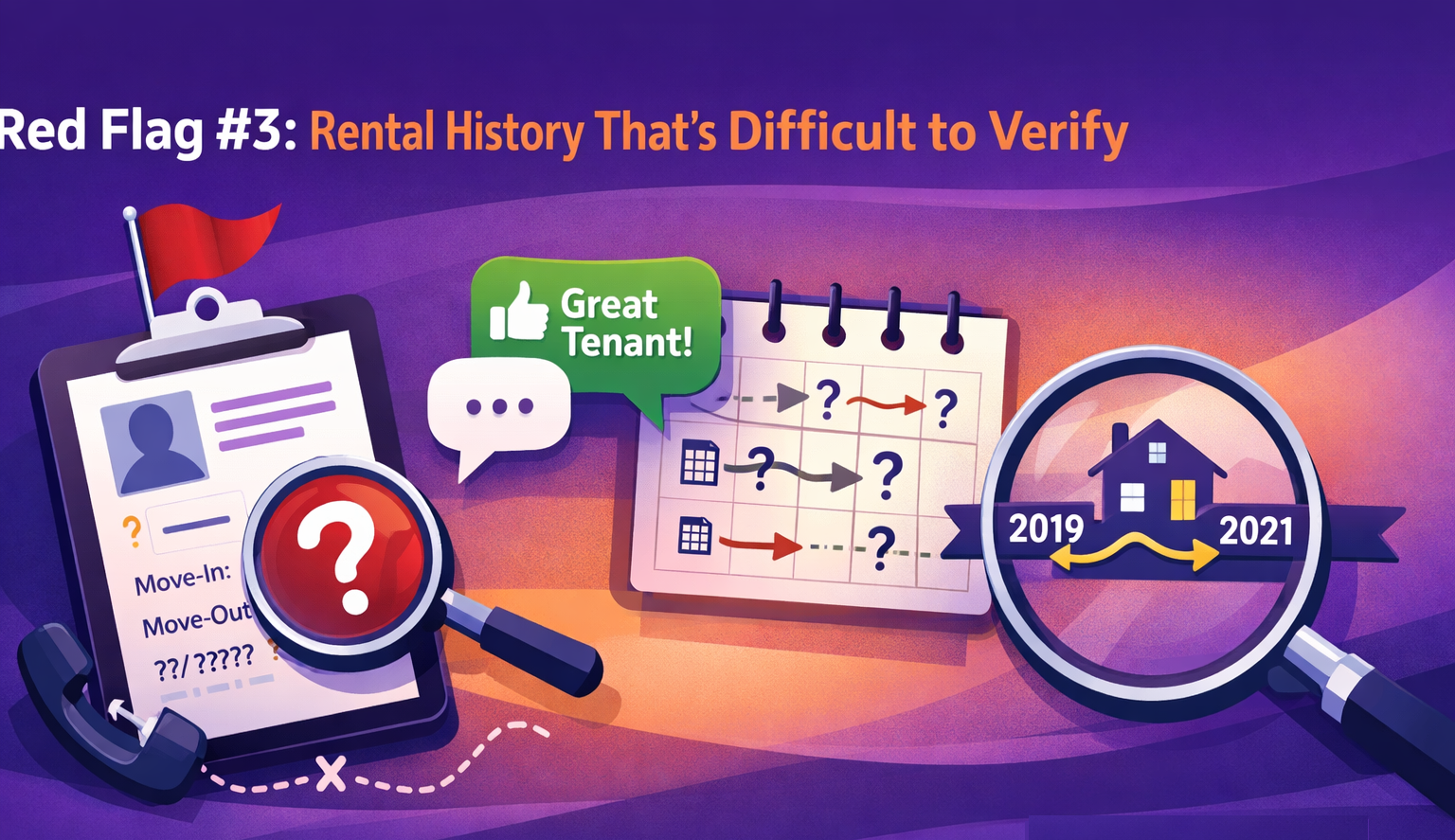
References are often treated as a formality. Call the previous landlord. Confirm dates. Move on. But in some cases, rental history becomes harder to validate:
- Contact information that leads nowhere
- References that seem overly positive but vague
- Inconsistencies between stated and verified timelines
These situations don’t always mean there’s a problem. But they do require more diligence.
Reliable rental history tends to be easy to confirm. When it isn’t, it’s worth understanding why.
Red flag #4: Urgency that feels disproportionate
Some applicants are simply organized and ready to move. Others feel rushed. There’s a difference.
Statements like:
- “We need to move in immediately”
- “We can pay upfront if needed”
- “We’ll take it without seeing it again”
Can signal urgency that goes beyond normal interest.
In some cases, this is harmless. In others, it reflects prior rental issues or pressure to secure housing quickly.
It’s not about rejecting urgency. It’s about slowing down enough to evaluate it properly.
Red flag #5: Communication that’s inconsistent or evasive
Most of the screening process happens through communication. Email. Phone. Messaging.
And this is where patterns start to emerge. Clear, consistent communication tends to correlate with smoother tenancy. Not always, but often.
On the other hand:
- Delayed responses
- Avoidance of direct questions
- Changing details over time
These don’t guarantee future problems. But they do suggest potential friction.
And friction, over a lease term, tends to compound.
Screening is about patterns, not single moments
One red flag on its own rarely tells the full story. What matters is how multiple signals come together.
An incomplete application combined with unstable income and unclear rental history paints a different picture than any one of those factors alone.
This is where experience helps. And where structured processes outperform instinct.
Because relying on “gut feeling” often leads to inconsistent decisions, especially under pressure.
The balance between caution and compliance
It’s worth acknowledging something here.
Tenant screening in California, and especially in Los Angeles, sits within a legal framework that requires consistency and fairness.
You can’t simply reject applicants based on vague concerns or subjective impressions.
If you’ve explored common fair housing mistakes California landlords make, you’ll know how easily inconsistent screening can cross into compliance issues.
This is why:
- Criteria should be clearly defined
- Decisions should be documented
- Standards should be applied uniformly
Screening isn’t just about protecting your property. It’s about doing so in a way that holds up if questioned.
Technology is changing how screening works
Manual screening processes leave more room for inconsistency.
In 2026, more landlords are shifting toward structured, digital systems that:
- Standardize applications
- Automate parts of verification
- Make comparisons easier
This doesn’t remove judgment. It supports it.
And as we’ve seen when looking at how rental property technology is improving leasing decisions, better systems tend to reduce both errors and bias.
Which benefits everyone involved.
Where property managers tend to reduce risk
Tenant screening is one of those areas where small mistakes can become long-term problems.
Late payments. Lease violations. Early move-outs. Evictions. Most of these trace back, at least partially, to the initial screening decision.
Property managers don’t eliminate risk entirely. But they tend to reduce it by:
- Applying consistent criteria
- Following structured processes
- Separating urgency from decision-making
We’ve seen how this leads to more stable tenancies, even in competitive markets.
Not because they avoid all risk. But because they manage it more deliberately.
A final thought on catching issues early
The goal of screening isn’t to find perfect tenants. They don’t exist.
It’s to identify patterns that suggest reliability, stability, and alignment with your property.
Most problems don’t come from obvious red flags. They come from small signals that were noticed, but not acted on. That’s the difference.
If you’re looking to make your screening process more consistent and less reactive, working with a team like Posh Property Management can help put structure around those decisions. Not by overcomplicating things, but by making sure the same standards apply every time.
Because in LA, the cost of getting screening wrong isn’t immediate.
It shows up later. And usually all at once.
FAQs
What are the biggest red flags in tenant screening?
A: Incomplete applications, unstable income, unverifiable rental history, and inconsistent communication are common warning signs.
Can landlords reject tenants based on red flags?
A: Only if decisions are based on consistent, documented criteria that comply with fair housing laws.
How important is rental history in screening?
A: Very important. Verified rental history helps predict reliability and long-term tenancy behavior.
Does tenant screening reduce risk completely?
A: No, but it significantly reduces the likelihood of payment issues, lease violations, and early turnover.
Should landlords use technology for tenant screening?
A: Yes. Structured systems help standardize decisions, reduce errors, and improve consistency.